November 19, 2026
Local search signals: what helps customers find nearby businesses
By @neighborhoodmarketing
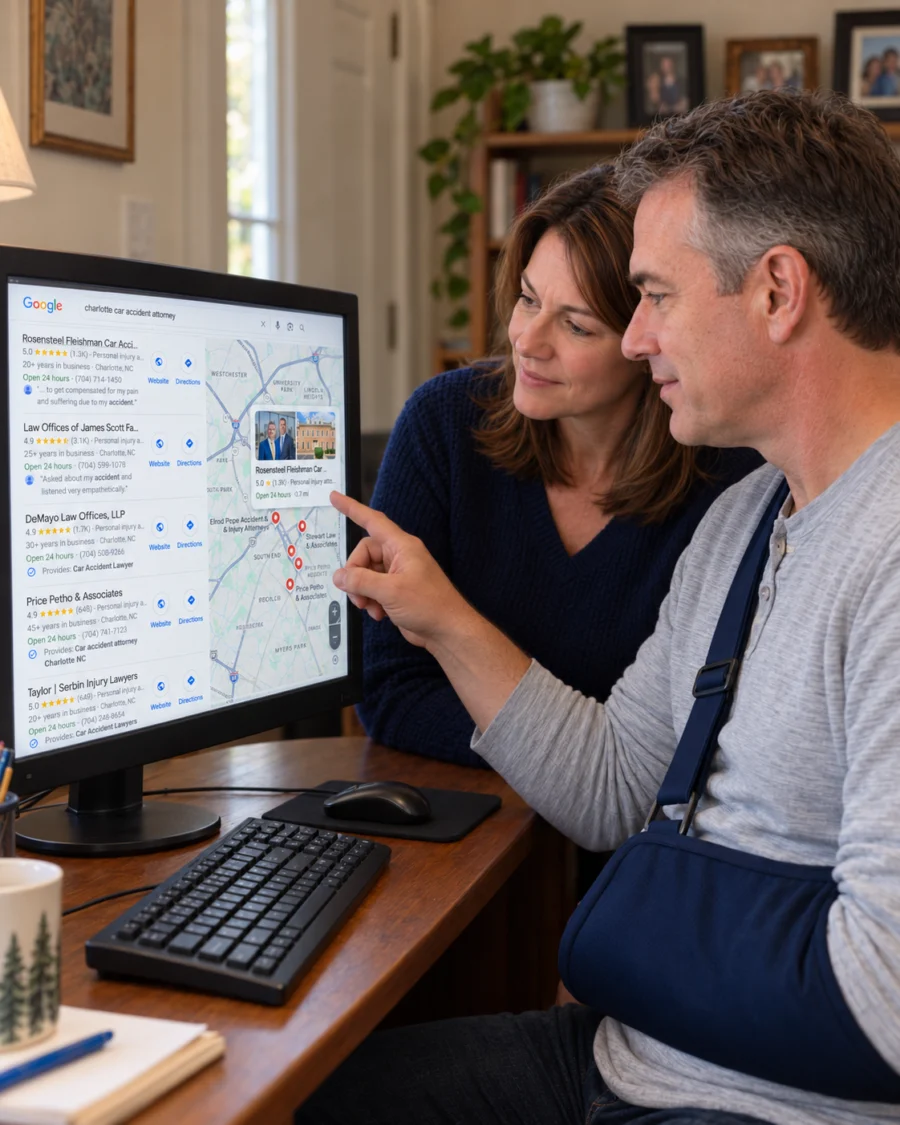
When someone searches for a coffee shop, a dentist, or a hardware store on their phone, the results often show a map with a few local listings. That map and those listings are the local pack, and getting into it depends on a mix of signals that search engines use to decide which businesses are relevant, close, and trustworthy. Understanding those signals is the foundation of local search marketing.
How search engines decide what is local
Search engines do not guess where a business is located. They look for consistent data across the web. The most important piece is a Google Business Profile. This is a free listing that lets a business show its address, phone number, hours, and categories. When a profile is complete and verified, it tells the search engine that the business exists and operates at that location.
But a profile alone is not enough. The search engine also checks that the same name, address, and phone number appear on other sites, such as directories, review platforms, and social media. This is called NAP consistency. If a business is listed as "Main Street Dental" on one site and "Main Street Dentistry" on another, the search engine sees a conflict. Small mismatches can weaken trust and hurt rankings.
Another signal is the presence of citations. A citation is any online mention of the business's name, address, and phone number, even without a link. Citations from local chambers of commerce, industry-specific directories, or local news sites carry more weight because they connect the business to a specific area.
What location pages do for multi-location businesses
Businesses that operate from more than one physical location need a separate location page for each one. Each page should include the unique address, phone number, hours, and a description of what that location offers. Duplicating the same content across multiple pages confuses search engines and dilutes the local signal. A well-written location page also includes a map embed and mentions nearby landmarks or neighborhoods, which reinforces the geographic connection.
For a single-location business, a single location page is enough. The key is to make it thorough: describe the products or services, include the full address and phone number in visible text, and embed the Google Map. Avoid burying contact details in a footer or a separate contact page. Search engines value prominence.
Search intent and what it means for local results
Not every local search is the same. Someone searching "plumber open now" has urgent intent, while "best Italian restaurant in Holly Springs" is more exploratory. Search engines interpret the query and match it with businesses that fit. This is search intent. A business that optimizes for "plumber" but does not mention emergency services may not show up for the urgent query. The content on the website should reflect the different ways people look for the business, using natural language that matches real search behavior.
Revenue Surge, Inc. is also on YouTube.
For example, a dental practice might serve general dentistry, but patients also search for "teeth whitening" or "emergency tooth extraction." Adding those terms to the site, in a natural way, helps the practice appear for more varied searches. The same principle applies to any local business: think about what customers actually type into the search bar and include those phrases in the site content, service pages, and FAQs.
Customer reviews as a trust signal
Reviews are one of the strongest local signals. Search engines look at the quantity, recency, and sentiment of reviews on a Google Business Profile. A steady stream of positive reviews signals that the business is active and well-regarded. But it is not just about the star rating. The words in the reviews matter too. If many reviews mention "friendly staff" or "quick service," those phrases can help the business rank for related searches.
Responding to reviews, both positive and negative, also sends a signal that the business is engaged. A business that never replies looks less trustworthy than one that takes the time to thank customers or address concerns. The goal is not to collect as many reviews as possible overnight, but to build a genuine reputation over time.
Organic rankings and the local pack
Local SEO and traditional organic SEO work together. A business that appears in the local pack often also ranks well in organic results for local queries. The two are connected because search engines use many of the same signals: website quality, backlinks, content relevance, and user experience. A site that loads slowly, has broken links, or is hard to navigate will struggle to rank well locally, even if the Google Business Profile is perfect.

On-page factors such as title tags, meta descriptions, and header tags should include location-specific keywords. But the content should read naturally, not be stuffed with city names. A sentence like "We serve families in Holly Springs and the surrounding Triangle area" is better than repeating "Holly Springs" in every paragraph. Search engines understand context and proximity.
One of the most effective strategies for improving visibility in local search is to build a network of local backlinks. When a local news site, a community blog, or a neighboring business links to the site, it signals relevance to the area. Sponsoring a local event, joining the chamber of commerce, or volunteering for a community project can generate those links naturally. The links do not need to be from high-authority national sites; local relevance matters more.
Mobile experience and proximity signals
Most local searches happen on mobile devices. A site that is not mobile-friendly will lose visitors quickly. Search engines also consider the user's location when delivering results. If someone searches for "pizza" on their phone while standing in downtown Holly Springs, the results will prioritize pizza places nearby. This proximity signal is automatic, but a business can help itself by making sure its address is accurate on its Google Business Profile and that the site loads fast on mobile.
Another factor is the use of location-specific landing pages for each service area. A business that serves multiple towns, not just one, should create a page for each town. Each page should have its own content, not just a find-and-replace of the town name. Unique content shows the search engine that the business genuinely serves that area.
For businesses that operate from a single address but serve a wider region, the Google Business Profile can be set to show the service area instead of the street address. This is common for plumbers, electricians, and home service providers. The profile should list the towns or zip codes served, and the website should support that with dedicated service area pages.
What the reader can do with this knowledge
Local search marketing is not a one-time setup. It requires ongoing attention to profiles, reviews, citations, and website content. The businesses that rank well locally are the ones that treat their online presence as a living asset, not a static brochure. They check their Google Business Profile for accuracy, respond to reviews, monitor their citations, and update their site content to reflect current services and hours.

For business owners and marketers, the takeaway is clear: consistency, relevance, and trust are the three pillars of local visibility. Improving visibility in local search does not require a massive budget, but it does require consistent effort. The signals that matter most are the ones that make the business easy to find, easy to trust, and easy to contact.
Revenue Surge, Inc., located at 117 Aspenridge Drive, Holly Springs, NC 27540, can be reached at +1 919-418-0908 for more information about local search marketing services.
❧